From the deep midwinter darkness to the never-ending light of June, almost every major milestone in the Swedish calendar is tied to a specific dish or pastry. Whether you are planning your first trip or your tenth, understanding these traditions is the key to unlocking the Swedish soul. In this guide, I’ll take you through the culinary highlights that define a year in Sweden.
The semla – more than just a bun
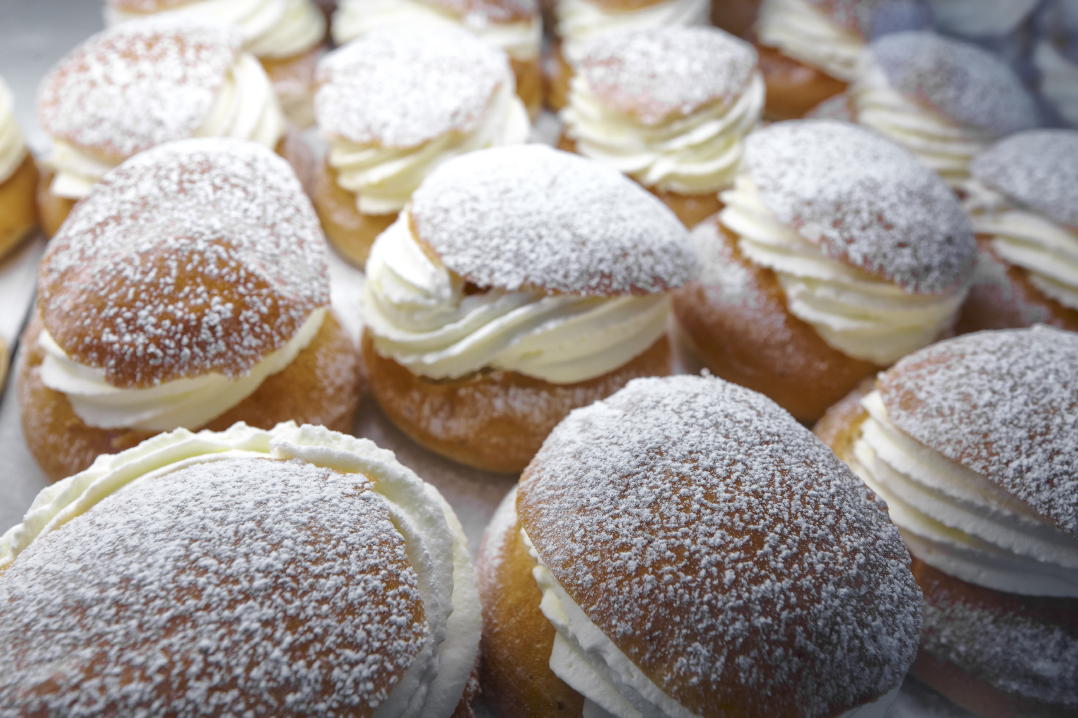
The year in Sweden doesn’t really start on January 1st; it starts when the semla arrives in bakery windows. This cardamom-scented bun, filled with smooth almond paste and a generous cloud of whipped cream, is a national obsession. Historically, it was reserved for Fettisdagen (Shrove Tuesday) as a final indulgence before Lent.
Today, the religious connection has faded, but the passion remains. I remember my first winter here back in the 90s, being confused why everyone was queuing in the snow for a bun. Now, I’m right there with them. While most people enjoy a semla with Swedish coffee, some traditionalists still prefer the “milk bath” (known as hetvägg), where the bun is served in a bowl of warm milk.
The Swedish waffle day – Våffeldagen
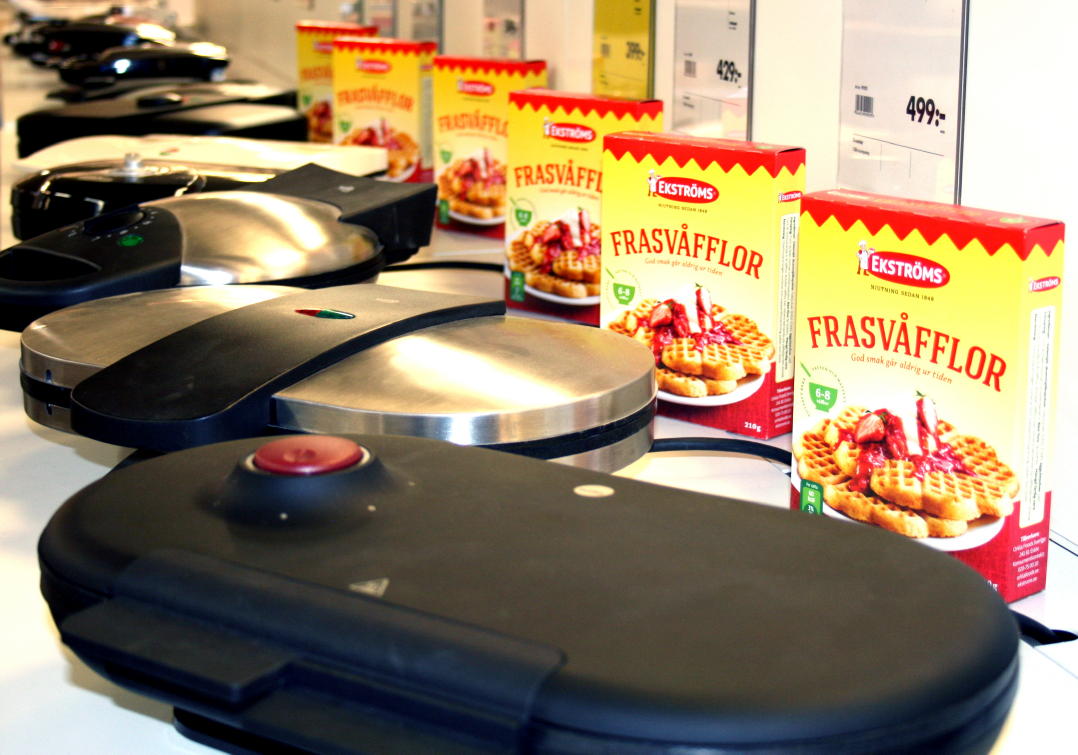
On March 25, the air in Swedish towns begins to smell like vanilla and toasted batter. This is Våffeldagen. Interestingly, this tradition started because of a linguistic misunderstanding. The religious celebration of Lady Day – Vårfrudagen – sounded so much like “Våffeldagen” in the old Swedish vernacular that people simply started making waffles.
Swedes prefer their waffles heart-shaped and crispy, usually served with cloudberry jam or strawberry jam and dollops of whipped cream. If you are in Stockholm or Gothenburg during this time, you’ll find specialized “våffelstugor” (waffle huts) that are worth the detour.
Easter: Herring and cardboard eggs

This decoration in a roundabout comes from Mölndal, Västergötland. You can see flying witches, decorated eggs, birch twigs, feather tokens and other elements of the Swedish Easter tradition.
Easter (Påsk) is a family-oriented affair. The smörgåsbord takes center stage, featuring staples like pickled herring, gravlax, eggs, and the iconic Jansson’s Temptation – a creamy potato and sprat bake that is far more delicious than it sounds.
Alongside the food, you must try Påskmust. This dark, spicy, and frothy soda is a staple on every Easter table. Here’s a little secret I’ve learned over the years: Påskmust is exactly the same drink as the famous Julmust sold at Christmas – the breweries simply swap the labels! It’s so popular that it actually causes a significant drop in Coca-Cola sales every time a holiday rolls around.
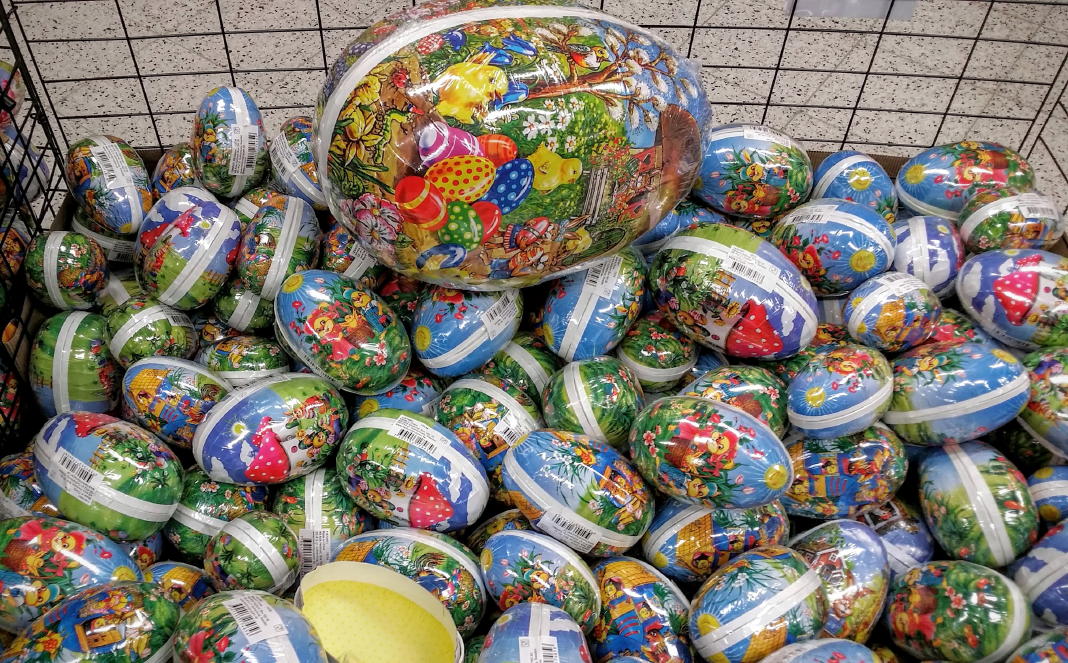
One thing you can’t miss are the påskägg. These are large, colorful cardboard eggs filled to the brim with Swedish “lösgodis” (pick-and-mix candy). Unlike the chocolate eggs common in the UK or US, these are reusable and often cherished as family heirlooms.
Experience Sweden like a local
Planning to visit during one of these festive seasons? To get the best experience, I recommend staying in a traditional Swedish manor or a cozy city apartment. These spots often host their own traditional buffets and celebrations.
Check availability for your dates
Insider tips from 30 years of Sweden travel. This guide contains affiliate links (marked with ➔) to help support my work at no extra cost to you.
Walpurgis Eve and the arrival of spring

Valborg on the island of Utö in the Stockholm archipelago
On April 30, Swedes celebrate Valborg (Walpurgis Eve). After a long, dark winter, we gather around massive bonfires to “scare away” the cold. It’s a very social evening where local choirs sing traditional songs to welcome the spring. In university towns like Uppsala and Lund, the celebrations are legendary and involve thousands of students wearing their white caps.
Graduation time and the “Studenten” fever

From late May to early June, don’t be surprised if you see city centers filled with trucks (studentflak) carrying cheering teenagers in white captain-style hats. This is Studenten – the celebration of graduating from secondary school (gymnasium).
While the students are often seen partying with bubbel (sparkling wine), the culinary heart of this tradition happens at home. Families host massive studentmottagning receptions. These usually feature cold buffets with salmon, potato salad, and sparkling drinks. The centerpiece is often a studenttårta – a cake decorated with a miniature graduation cap or the student’s name in marzipan.
Swedish National Day, June 6
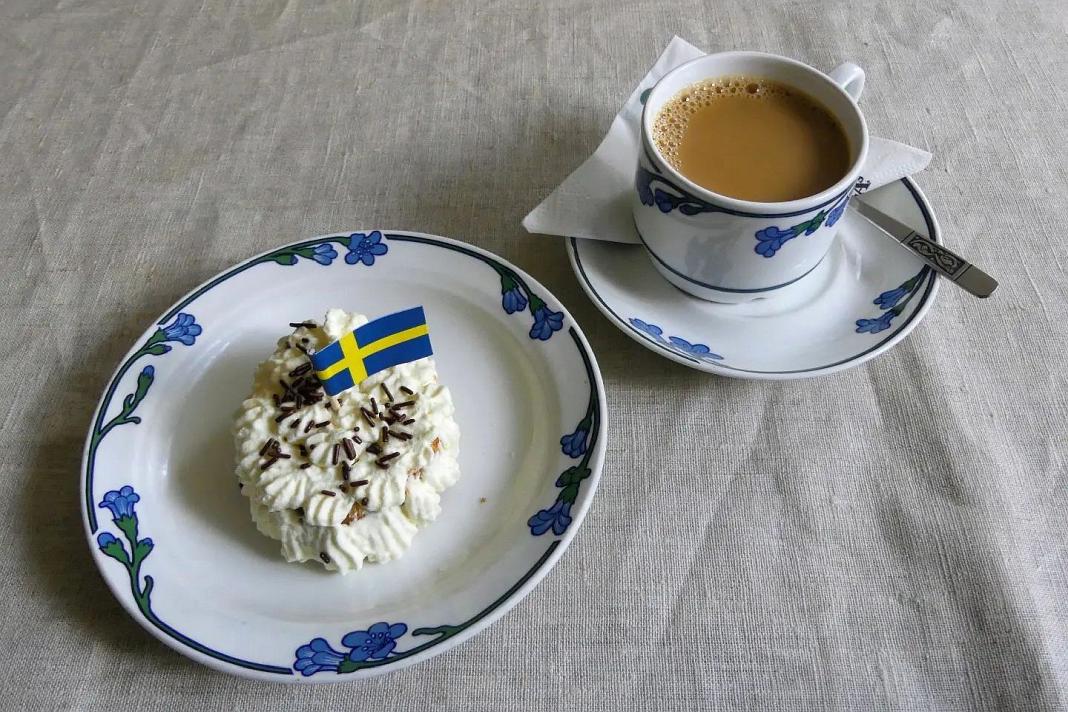
On June 6, the country celebrates Svenska flaggans dag (National Day), commemorating the election of Gustav Vasa as King in 1523. You will see the blue and yellow flag everywhere. While it doesn’t have a centuries-old dish, many Swedes celebrate with a Nationaldagsbakelse – a special almond and citrus pastry created specifically for the day. Others prefer a simple strawberry cake (jordgubbstårta), which serves as a delicious “warm-up” for Midsummer.
Midsummer: The ultimate Swedish highlight
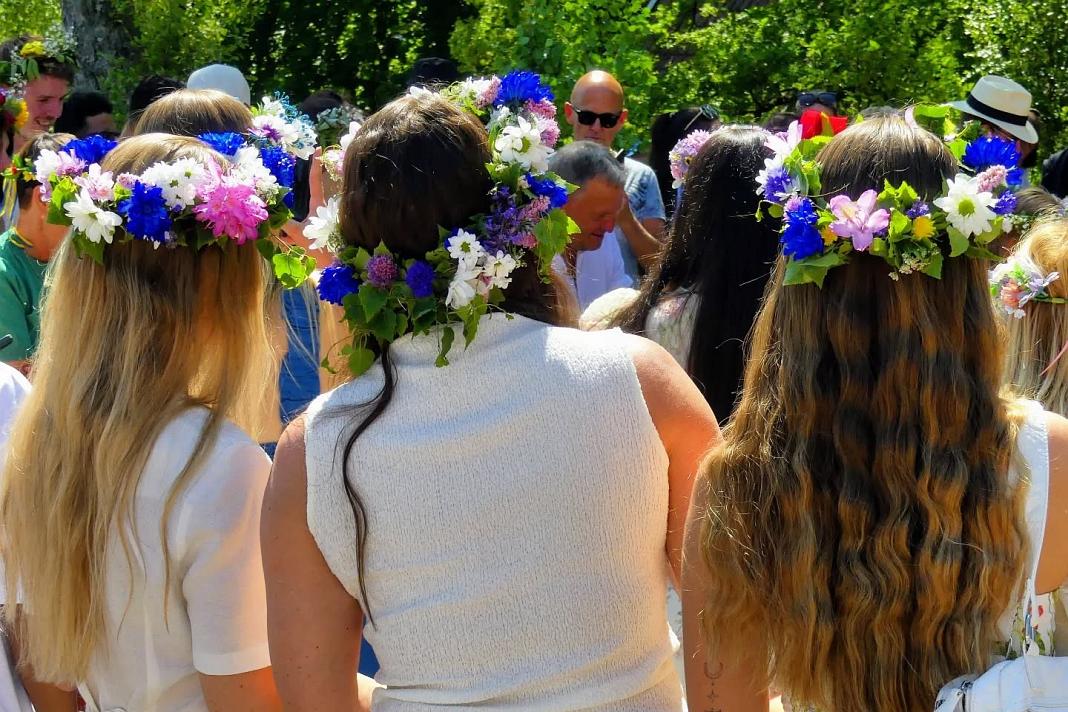
If you only visit Sweden once, make it for Midsummer (Midsommar). Celebrated around the summer solstice in late June, it is arguably more important to Swedes than Christmas. We raise maypoles decorated with birch leaves and flowers, wear floral wreaths in our hair, and dance like “little frogs” around the pole.
To understand the scale of this holiday: Swedes consume nearly 3,000 tonnes of herring during this single weekend. It’s a culinary institution.
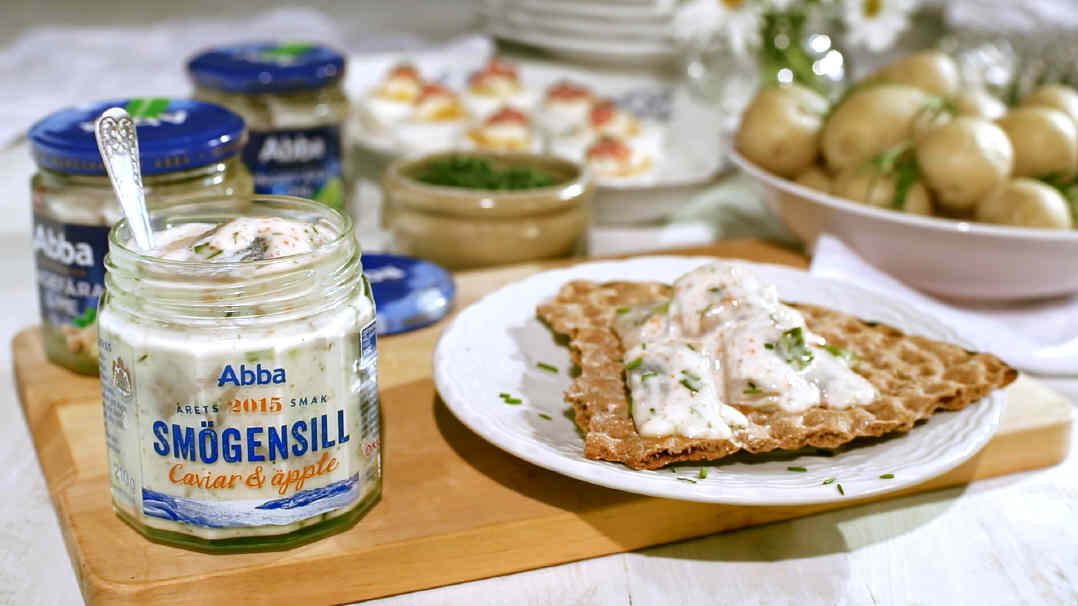
The classic Midsummer meal includes:
- Matjes (soused herring): This is the closest thing to a national institution. It’s seasoned for 4 – 6 months, giving it a milder and more rounded flavor compared to standard pickled herring.
- Pickled herring (Sill): The traditional inlagd sill (plain pickled) and löksill (onion marinated) are the most popular, often produced in the coastal region of Bohuslän.
- The sides: Boiled new potatoes, fresh chives, and gräddfil (a specific type of Swedish sour cream).
- The drink: Chilled Aquavit (Snaps) accompanied by loud drinking songs.
- The finale: The first Swedish strawberries of the season, usually served with cream.

Herring from Klädesholmen Seafood at the Salt & Sill Hotel and Restaurant on the little island of Klädesholmen
And the best part? Over the years, I’ve noticed that younger generations are bringing new life to the table with creamy herring variants like mustard, garlic, or even chili-lime.
Crayfish parties – Kräftskiva

In August, the focus shifts to the Kräftskiva. These are boisterous, informal parties where we eat cold, boiled crayfish seasoned with plenty of crown dill. You’ll see adults wearing silly paper hats and bibs, which might look ridiculous, but it’s all part of the charm. It’s one of my favorite traditions because it’s purely about enjoying the last warm nights of summer with friends.

Surströmming – the world’s stinkiest fish
If the Crayfish party is for everyone, the Surströmming premiere in late August is for the brave. Fermented Baltic herring is famous for being the “stinkiest fish in the world.” In fact, the smell is so potent that many apartment buildings in Sweden actually ban the opening of the cans indoors!
And the best part? When eaten correctly, it’s actually a delicacy. We serve it as a surströmmingsklämma:
- Tunnbröd (Swedish flatbread).
- Slices of almond potatoes (mandelpotatis).
- Finely chopped red onions and a dollop of gräddfil.
I’ll never forget the first time I witnessed a can being opened underwater (a common trick to minimize the smell). It’s a polarizing tradition, but one that is deeply rooted in the history of the Swedish North.
Autumn harvest and the iconic cinnamon bun
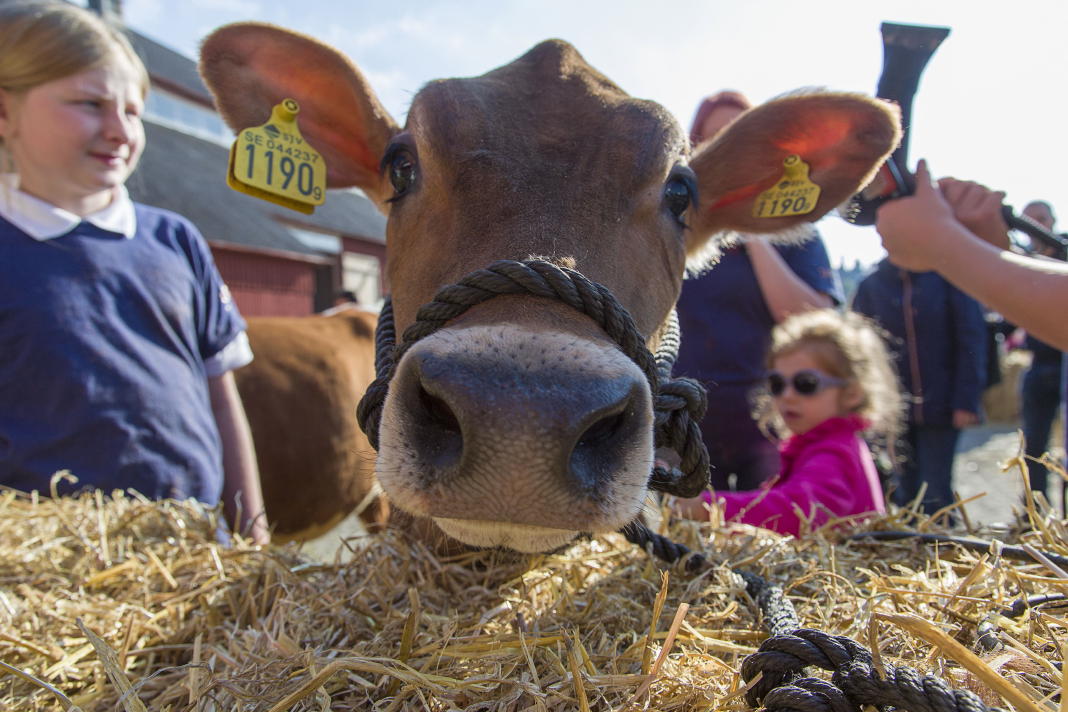
Autumn is a time for the Öland Harvest Festival and the famous Apple Market in Kivik, where you can see massive artworks made entirely of apples. But the real star of autumn is the Kanelbulle (Cinnamon Bun).

While you can find them year-round at any café, kiosk, or gas station during a fika (coffee break), October 4 is the day they truly reign supreme. Since 1999, we have celebrated Kanelbullens dag. To give you an idea of the scale:
- Almost 60 percent of all Swedes enjoy at least one cinnamon bun on this day.
- Approximately seven million buns are sold in bakeries and shops.
- At least as many are estimated to be baked at home!
It’s the one day where the whole country smells like cinnamon and sugar. My tip? Find a small local bakery (bageri) rather than a supermarket to get that perfect, buttery, pearl-sugar-topped experience.
Nobel Day and St. Lucia
As the darkness returns in December, Sweden lights up. On December 10, the eyes of the world are on the Nobel Banquet in Stockholm. But for most Swedes, December 13 is even more special. This is St. Lucia day.

Early in the morning, processions of children in white gowns, led by a Lucia with a crown of candles, bring light and music to schools, offices, and churches. We eat lussekatter (saffron buns) and drink glögg (mulled wine). It is, without a doubt, the most atmospheric day of the year.
Top winter tours in Stockholm
If you are visiting in December, don’t miss the chance to see the city lights from the water or take a guided tour of the Christmas markets in the Old Town (Gamla Stan).
Christmas and New Year
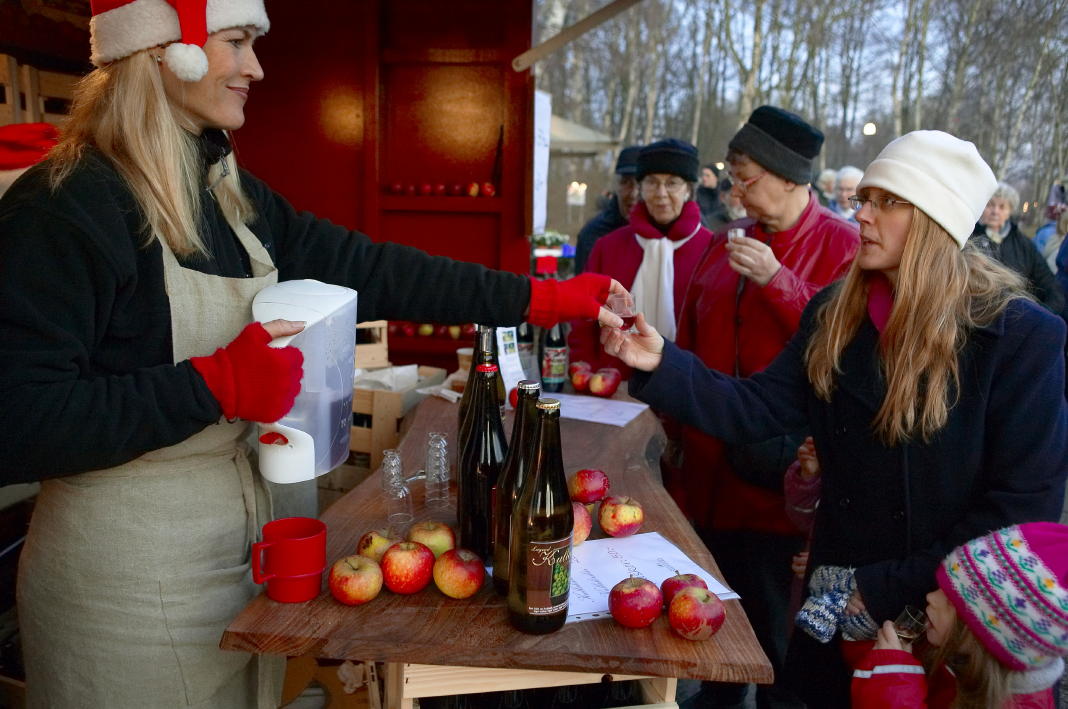
At a Christmas market in Skåne
The year concludes with the magic of Swedish Christmas markets. While Stockholm has the historic charm of Gamla Stan, Gothenburg is widely considered the “Christmas City” thanks to the spectacular light show at Liseberg amusement park. Families gather for the Julbord, a massive buffet that brings together all the flavors of the year.

But here is a fun fact: The most “modern” food tradition happens on New Year’s Day. In Sweden, January 1st is officially Pizza Day. After the long celebrations of New Year’s Eve, nobody wants to stand in the kitchen. Pizzerias across the country report that this is their busiest day of the entire year – often doubling or tripling their usual sales. If you find yourself in Sweden on the first day of the year, expect to wait in line for your Kebabpizza!
A final year-round favorite

No matter the season, when I’m asked what is the ultimate Swedish comfort food, I always say traditional Köttbullar. In this photo, they are served exactly as they should be: with small potatoes, creamy gravy, and tangy lingonberries. It’s the one dish that makes me feel like I’m truly “home” in Sweden.
Plan your city break
If you are heading to the big three, I’ve got you covered. Dive into my comprehensive guides for Stockholm, Gothenburg, and Malmö. I’ve packed them with over 30 years of tips on must-sees, sightseeing tours, and the best places to stay.
Practical tips for your visit
- Timing: If you want the “classic” experience, visit in late June for Midsummer or mid-December for Lucia.
- Booking: For holidays like Midsummer, many locals head to their summer houses, and cities can feel empty. I recommend you to book your countryside accommodation well in advance.
- Fika: Regardless of the season, never skip “fika” – the sacred coffee and cake break. It’s the glue that holds Swedish society together!
Savoring the seasons
No matter when you visit, there is always a seasonal treat waiting for you. Welcome to Sweden!
Hotels in Sweden
Among the accommodations offered, you will also find B&Bs, manor houses, inns, hostels, holiday resorts, campsites, and apartments.
Book now: Hotels in Sweden
Hungry for more? Explore Sweden’s city food scenes
Swedish traditions are the foundation, but the modern culinary heart of the country beats in its vibrant cities. I’ve spent countless days eating my way through these neighborhoods to find the spots where tradition meets innovation. Here are my deep-dive guides for your next foodie adventures in Stockholm and Gothenburg:
- Stockholm foodie guide – From historic market halls to the trendiest rooftop bars in the capital.
- A foodie’s guide to Gothenburg – My favorite spots for the freshest West Coast seafood and the world-class fika culture.
The Malmö experience: People often ask me why I haven’t written a single “Malmö foodie guide.” The reason is simple: Malmö’s food scene is so diverse and full of contrasts that it needs two separate deep dives to truly do it justice. One guide wouldn’t be enough to capture the gap between historic heritage and multicultural street food:
- Malmö Saluhall – A journey through a historic railway warehouse, now home to high-end artisanal flavors.
- Möllevångstorget – Exploring Malmö’s vibrant melting pot and legendary “falafel capital” foodie paradise.
Photo semla: Matton Collection/Johnér Bildbyrå/Stockholmsmässan. Photo waffle: Siba. Source for info on Easter food and Walpurgis Eve: VisitSweden US. Photo Valborg in Utö: Cicki Borg, utö.se. Source and photos Abba herring: Orkla Foods. Photo herring in a row: Klädesholmen Seafood. Photo harvest festival: Thomas Carlén/Tjolöholm Castle. Source for cinnamon bun day: VisitSweden DE and Mindshare mediebyrå; photo: Michael Krantz/Kokaihop.se. Photo Lucia at Nordstan shopping centre: Nordstan, Gothenburg. Photo Christmas market: Tourism in Skåne AB. Photo ferry: Stena Line.